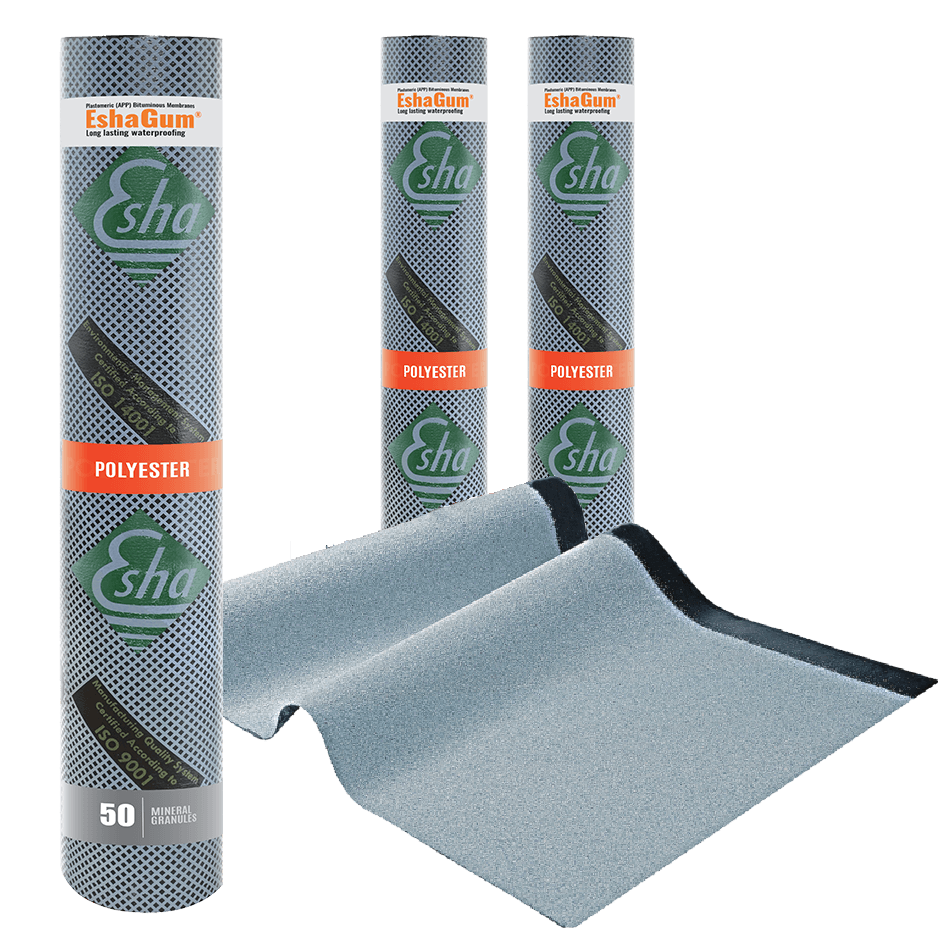
ESHAGUM APP -10 | Polymer-modified bituminous membrane
APP plastomeric bituminous membranesDescription
ESHAGUM is a polymer-modified bituminous membrane, produced from special types of bitumen enriched with selected polymer materials based on atactic polypropylene (APP). This composition gives it exceptional resistance to very high temperatures (softening point ≥148°C, resistance up to 130°C) and to intense solar radiation, whilst at the same time retaining all its characteristic properties at -10°C. It guarantees long-term waterproofing in projects exposed to extreme temperature fluctuations. It is available in five reinforcement types and three coating families, with tensile strength ranging from 300 to 1,100 N/50 mm, covering everything from standard flat roofs to bridge decks with separate EN 14695 certification.
The ARGYNET View: It is not the asphalt that matters — it is the reinforcement. The same membrane changes its mechanical strength class depending on what is inside it. The design specifies a combination of reinforcement, covering and weight, not simply ‘an APP membrane’.
Overview
Key Features
Resistance to weather and thermal conditions
- Excellent resistance to ultraviolet (UV) radiation
- Enhanced resistance to ageing over time
- Softening point ≥148°C (EN 1427) — amongst the highest in the range
- Resistance to high temperatures up to 130°C (EN 1110) without flow or slippage
- Flexibility at low temperatures down to -10°C (EN 1109)
- Wide range of application and operating temperatures
- Good performance in corrosive environments: acids, inorganic salts, gases, atmospheric pollution, ozone
Mechanical properties
- Tensile strength from 300/200 to 1,100/900 N/50 mm depending on reinforcement (EN 12311-1)
- Elongation at break up to 50/60 per cent (SP & SP250)
- Tear strength up to 600/700 N (ASTM D4073-94)
- Resistance to static puncture up to class L4 (>25 kg) with SP250 (EN 12730)
- Resistance to dynamic puncture, class I3 (EN 12691)
- Dimensional stability from -0.1/+0.1 per cent (glass fibre) to -0.4/+0.3 per cent (SP)
- Increased overall resistance to mechanical stress
Reinforcements — 5 options with different functions
- High-quality glass fibre mesh — dimensional stability, cost-effective solution
- Non-woven polyester — balance of strength and cost
- Polyester fabric with embedded glass fibres — maximum stability during heat-sealing, prevention of ‘banana’ warping
- Polyester-mesh combination — isotropic mechanical behaviour
- Spunbond polyester (SP / SP250) — increased resistance to cracking, puncture, shear and tensile stress
Coatings — 3 applications
- Mineral granules (green, white, brown-red) — protection of the waterproofing layer from solar radiation on exposed flat roofs
- Thin polyethylene film — when the membrane is protected by other materials (tiles, concrete, gravel)
- Woven polypropylene fabric — can be coated with acrylic waterproofing compounds (ESHACRYCOAT) or an aluminium-asphalt solution (ESHALUMIN)
- Underlay: PE film or quartz sand, depending on the installation method
Where it is used
Technical solutions where this material is used.
Related Products
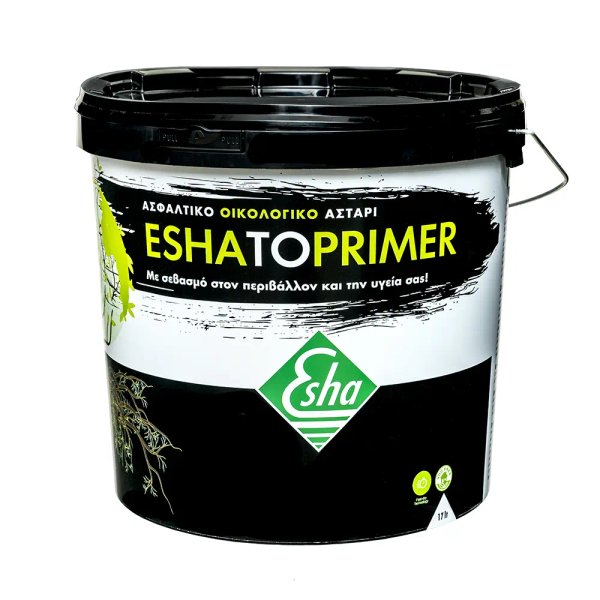
ESHATOPRIMER | Adhesive primer for bituminous membranes
Category: Liquid-applied bituminous coatings
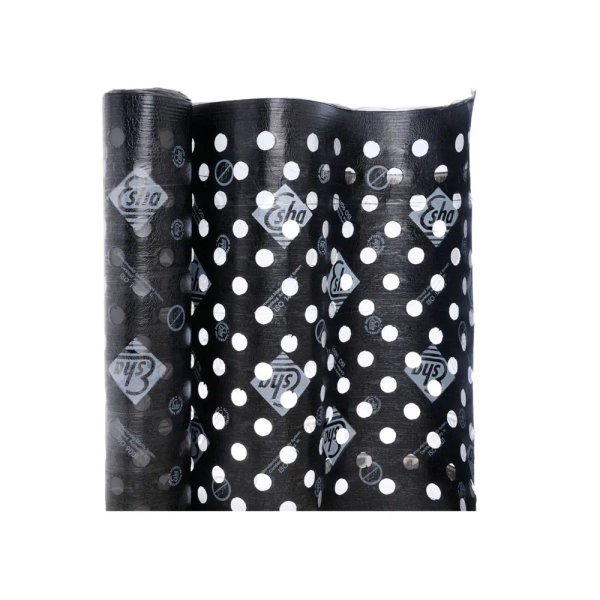
ESHAPERFO | Perforated bituminous membrane for a vapour pressure release layer
Category: Specialised bituminous membranes
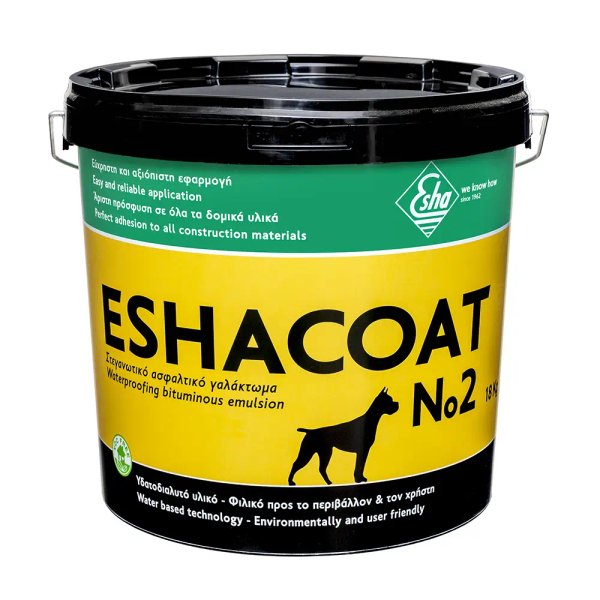
ESHACOAT | Bituminous Emulsion
Category: Liquid-applied bituminous coatings
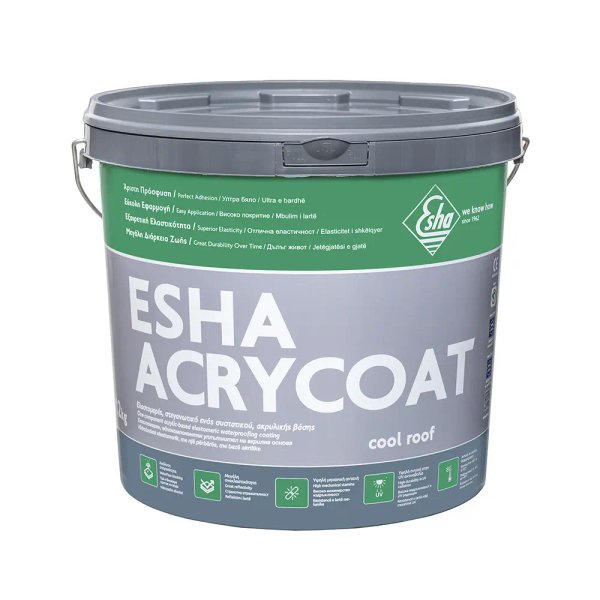
ESHA ACRYCOAT | White acrylic waterproofing compound
Category: Liquid-applied membranes