MacGrid | Biaxial & Multiaxial Geogrids
GeogridsDescription
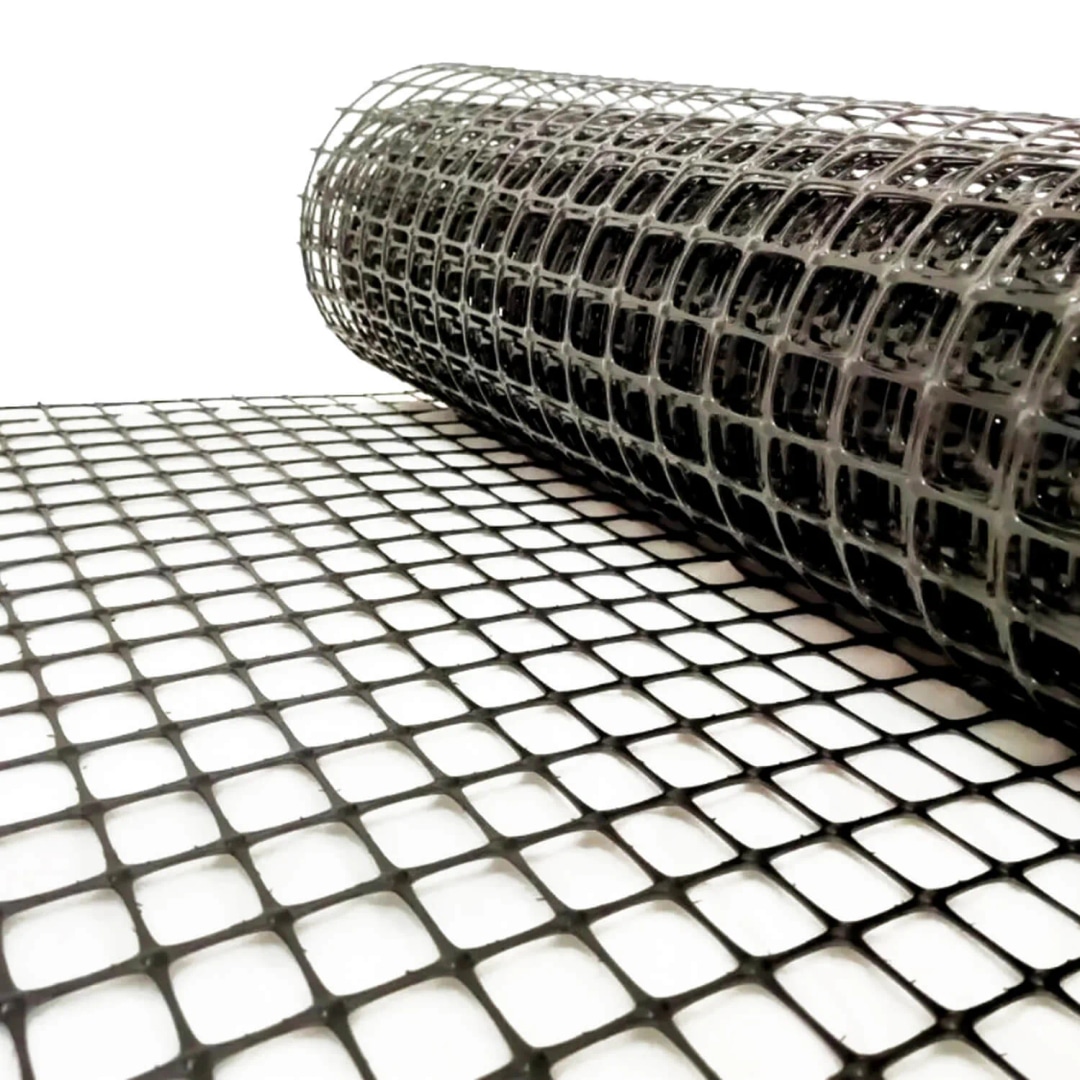
Biaxial geogrid — symmetrical strength of 20 to 300 kN/m for surface load stabilisation: roads, platforms, car parks. Biaxial geogrids have a symmetrical structure: strength is developed in both directions, thereby increasing the bearing capacity of the existing subgrade whilst ensuring the necessary retention of the aggregate.
The polymer and the shape of the loops vary depending on the tensile requirements and the properties of the fill material — and versions with three or more axes are available.
The ARGYNET View
Anchoring is mechanical, not magical: the grains must enter the loops and be retained. That is why the opening size is selected in relation to the particle size distribution of the aggregates — if it is too small, the granules cannot enter; if it is too large, they will not be retained.
The benefit is a reduced thickness of the base course for the same bearing capacity: fewer aggregates, fewer transport journeys, fewer hours of compaction.
Overview
Key Features
MacGrid EG
- Extruded polypropylene, symmetrical tensile strength up to 50 kN/m
- Single or multiple layers; decades of proven use
- Key component of many composite solutions
MacGrid EG-T
- Extruded PP with triangular loop shape — multiaxial behaviour
- Same range of applications; regarded as an evolution of biaxial products
MacGrid WG-S
- Woven PET with high-strength coating
- When the required strength exceeds that of extruded products
- Typically up to 300 kN/m, up to 1,000 kN/m on request
Where it is used
Technical solutions where this material is used.