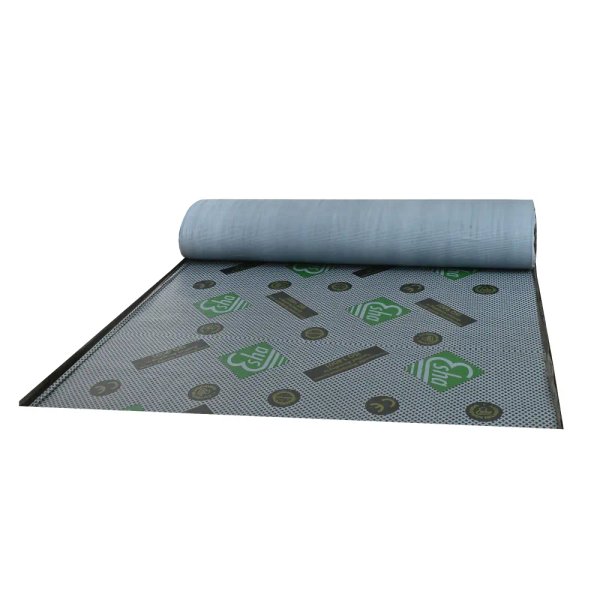
ESHAROOF | Bituminous membrane for pitched tiled roofs
Pitched roof waterproofing and insulationDescription
ESHAROOF is a lightweight bituminous membrane from ESHA (Alfa-Alfa Energy), specifically designed as a secondary waterproofing layer beneath roof tiles. Reinforced with a high-strength polyester composite fabric, it combines minimal weight with resistance to tearing by fixing nails — 150 N along its length (EN 12310-1). It is available in two versions: P-P with polyethylene film on both sides (0.6 kg/m², thickness 0.65 mm) and P-Q with quartz sand on the top surface (1.0 kg/m², thickness 1.1 mm), which improves slip resistance during use. It remains stable within a temperature range of -20 °C to +100 °C, is resistant to rodents and is installed using simple mechanical fastenings — without the need for a torch on the roof. Roll size 30 × 1 m (30 m²), CE certified to EN 13707 and EN 13969.
The ARGYNET View
The most common cause of failure in pitched tiled roofs is not the membrane itself — it is choosing the wrong type of membrane for the specific roof construction.
ESHAROOF features a polyethylene film; it is vapour-tight, not breathable. This makes it the right choice for the traditional ventilated Greek pitched tiled roof, where there is a cavity between the insulation and the tile substrate. However, if installed on a thermally insulated roof without a ventilated gap, the water vapour rising from inside the building becomes trapped beneath it: this leads to condensation, damp in the thermal insulation and, in the long term, rotting of the timber.
Overview
Key Features
Structure & reinforcement
- High-strength polyester composite fabric reinforcement
- P-P version: polyethylene film coating on both sides
- P-Q version: quartz sand on top, polyethylene film underneath
- ‘Lightweight’ classification — 0.6 kg/m² (P-P), 1.0 kg/m² (P-Q)
Mechanical properties
- Tensile strength P-P: 450 N/50 mm lengthwise, 400 N/50 mm crosswise
- Tensile strength P-Q: 300 / 250 N/50 mm
- P-P nail tear strength: 150 N lengthwise, 80 N crosswise
- P-Q nail tear strength: 100 / 90 N
- Elongation P-P: 2 per cent lengthwise, 3 per cent crosswise
Thermal behaviour
- Stability under temperature variations: -20 °C to +100 °C
- Low-temperature flexibility: -25 °C (P-P) / -20 °C (P-Q), EN 1109
- Softening point 85 °C (EN 1427)
- Penetration point 15–30 dmm (EN 1426)
Where it is used
Technical solutions where this material is used.
Related Products
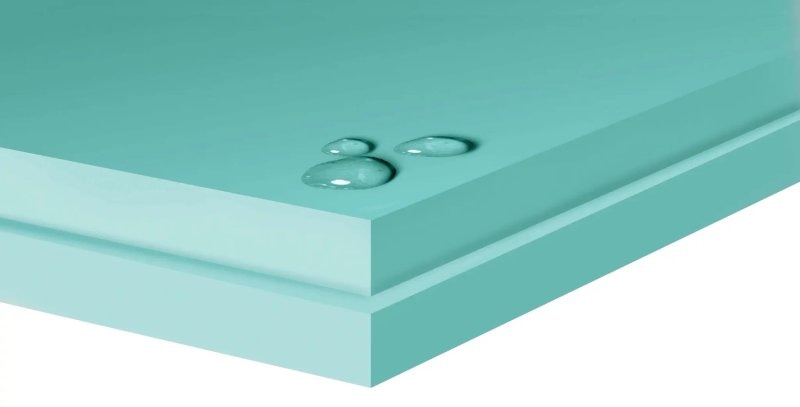
FIBRANxps MAESTRO M | Pitched tiled roof
Category: Extruded polystyrene (XPS)
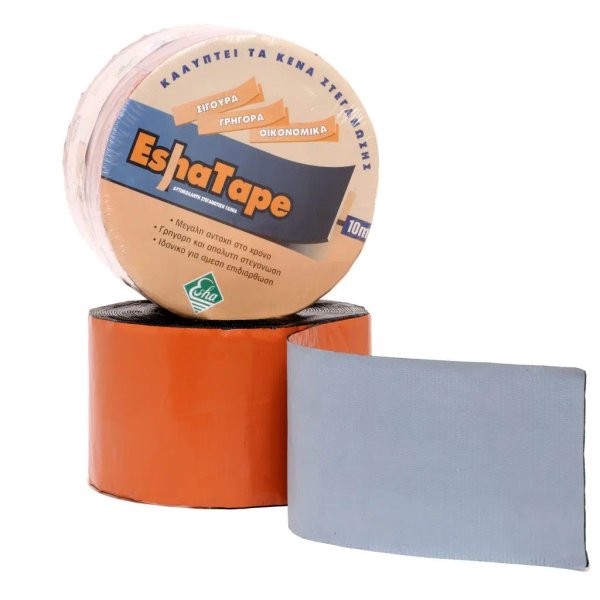
ESHATAPE | Self-adhesive waterproofing tapes
Category: Specialised bituminous membranes
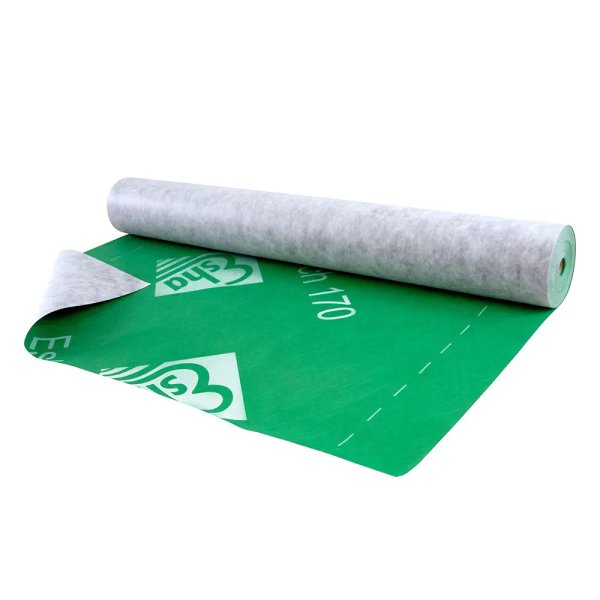
ESHADACH | Breathable membrane for pitched tiled roofs
Category: Synthetic membranes
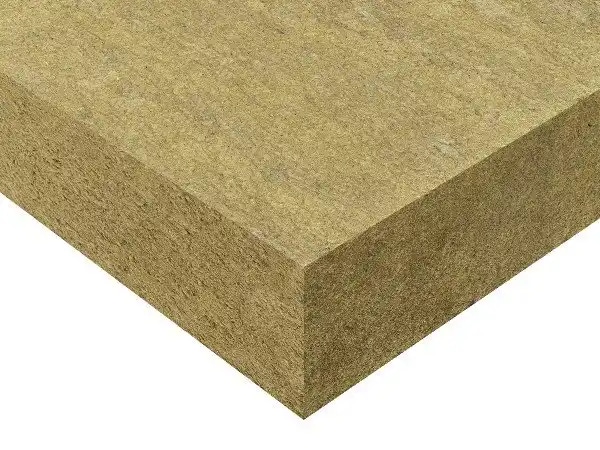
FIBRANgeo B-570 | Stone wool for masonry, roofing and dry construction
Category: Stone wool insulation