
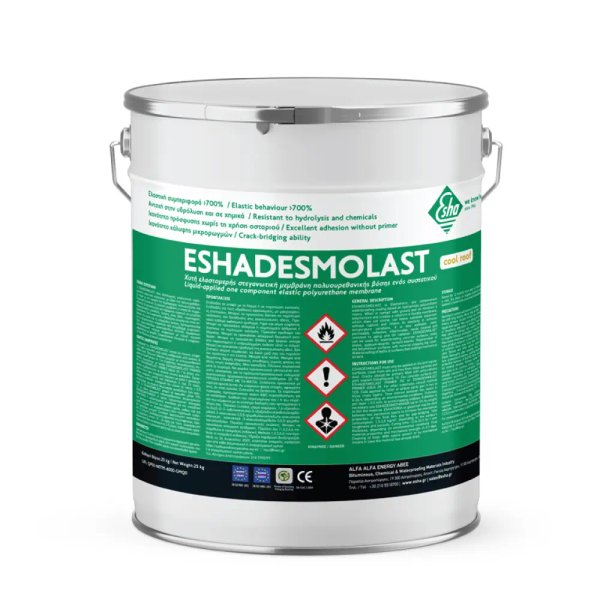
ESHADESMOLAST | 1C polyurethane waterproofing
Liquid-applied membranesDescription
EshaDesmolast is a single-component elastomeric liquid-applied coating for horizontal and vertical surfaces, based on hydrophobic polyurethane resins and special inorganic components. It cures on contact with moisture in the air and forms a cohesive, elastic, monolithic membrane without joints or seams.
The final membrane has an expansion and contraction capacity of around 700% — it does not shrink, does not crack and remains elastic over a wide temperature range, from -40°C to +80°C. Adhesion to concrete exceeds 2 N/mm² even without a primer (ASTM D 903). It is walkable, vapour-permeable with a water vapour permeability of 13 g/m²/day, reflective and easy to clean.
Its performance is documented by ETAG 005 tests for liquid-applied coating-based flat roof waterproofing systems: classification P4 for mechanical wear and climate zone S, having successfully passed accelerated UV ageing testing at 400 MJ/m² over 2,400 hours, thermal ageing at 80°C for 100 days, and 500 cycles of tensile stress at -10°C without cracking.
The ARGYNET View:
The two figures that come out on top in the comparison are not on the front cover of the bulletin. They are P4 and S.
ETAG 005-6 classifies liquid-applied coatings into mechanical wear classes (P1–P4) and climate zones (M = moderate, S = severe). Many cheaper materials are rated P2 and zone M — and this is perfectly legitimate. They simply have not been tested for a Greek flat roof with a surface temperature of 70°C in August and frost in January. When the specifier asks for documentation, these two values are the answer.
Second point, commercially crucial: adhesion >2 N/mm² without a primer. This does not mean that the primer is unnecessary — the data sheet itself recommends it to enhance the mechanical properties of the substrate. It means that in an emergency repair, or on a substrate that cannot be primed in time, the material will not let you down.
Overview
Key Features
Elasticity & crack bridging
- Elongation at break 700 per cent (DIN 53504)
- Tensile strength at break 4 N/mm², Shore A hardness 75
- Ability to bridge micro-cracks
- Does not shrink or crack
Adhesion & watertightness
- Adhesion to concrete >2 N/mm² without primer (ASTM D 903)
- Watertightness at 0.1 bar for 24 hours (DIN EN 1928)
- Vapour-permeable: 13 g/m²/day (DIN EN 1931) — does not cause condensation on the inside
Where it is used
Technical solutions where this material is used.
- WaterproofingGuide to Waterproofing Planters: How to Stop Water and Roots?View the solution
- Liquid-applied membranesTechnical Guide to Thermal Insulation and Waterproofing of the Flat Roof with PolyureaView the solution
- Liquid-applied membranesWaterproofing a balcony over existing tiles — without removalView the solution
Related Products
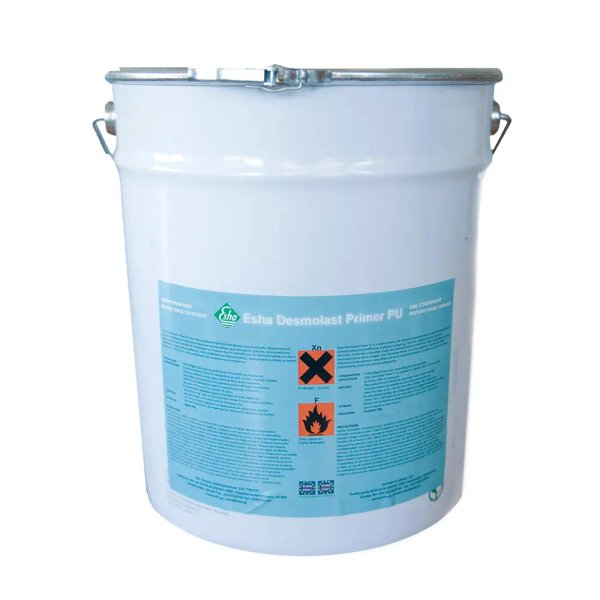
ESHADESMOLAST PRIMER PU | Polyurethane primer
Category: Liquid-applied membranes
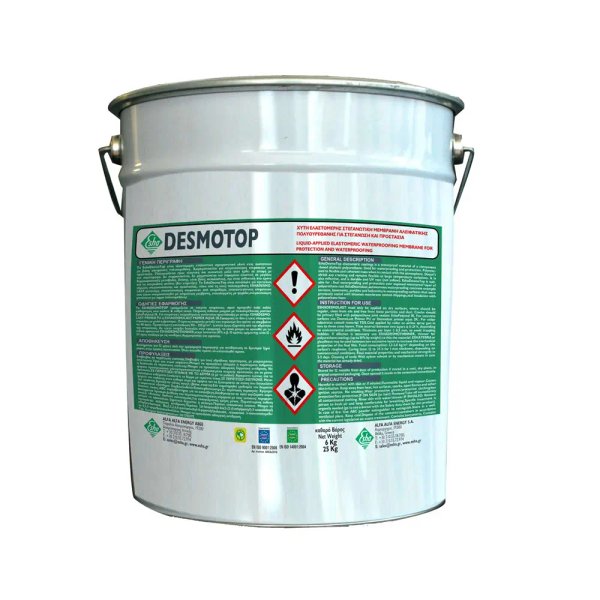
ESHADESMOTOP | Polyurethane protective coating
Category: Liquid-applied membranes
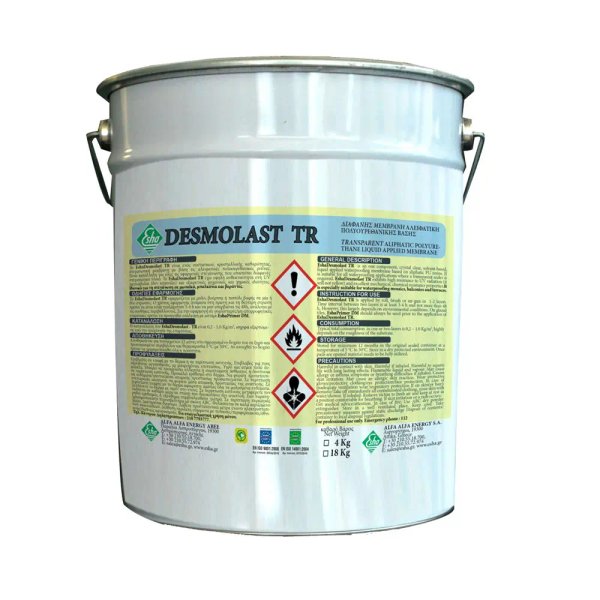
ESHADESMOLAST TR | Transparent polyurethane
Category: Liquid-applied membranes
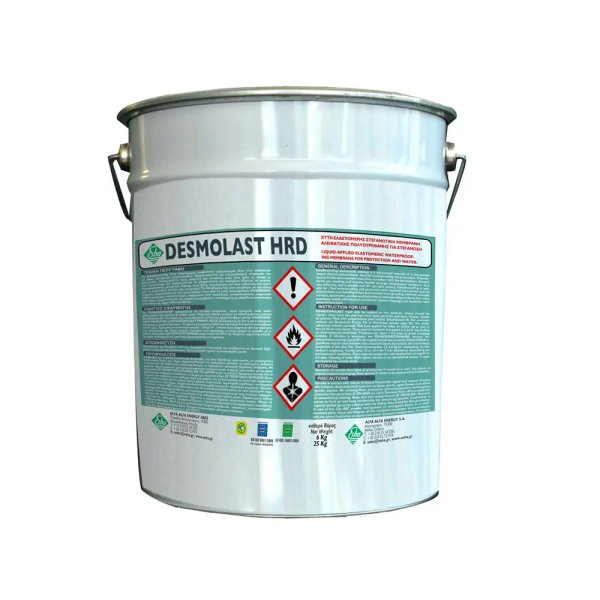
ESHADESMOLAST HRD | Liquid-applied polyurethane coating for car parks, road surfaces, etc.
Category: Liquid-applied membranes