
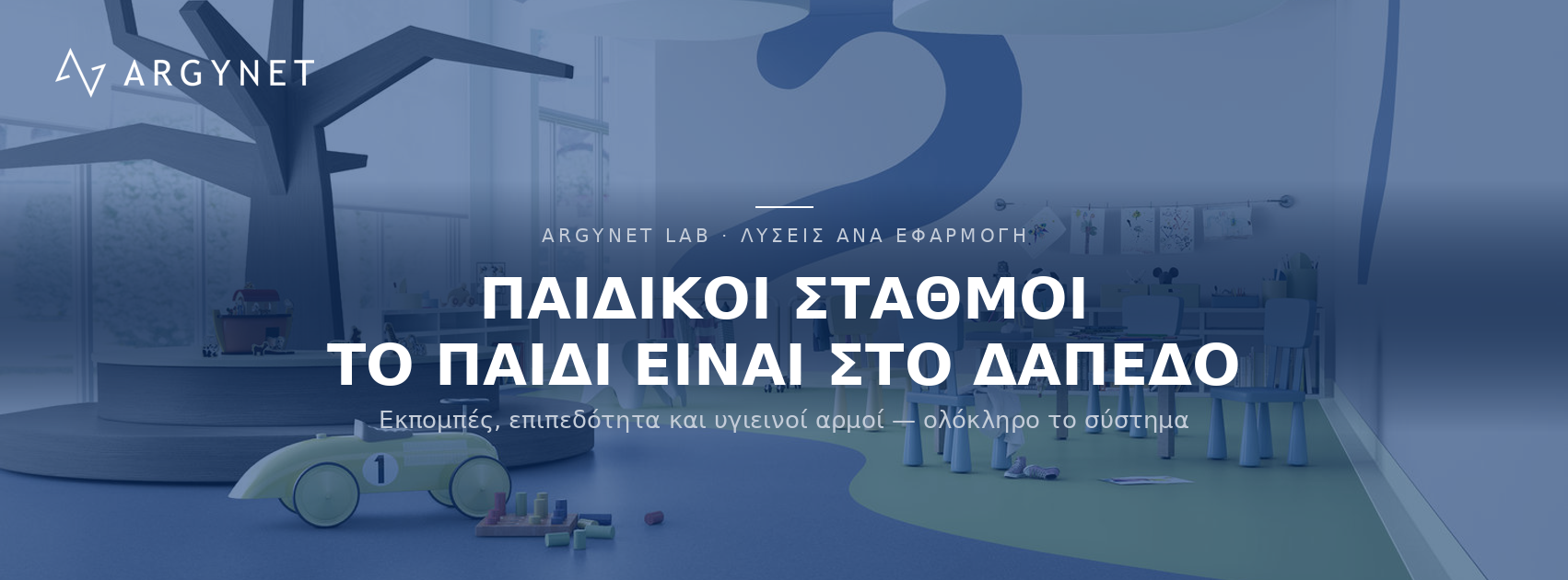
Flooring for nurseries and pre-schools
Last updated:
Solutions & Applications · Training
In any other building, the user stands on the floor. Here, they are on top of it: they crawl, sit and rest their face against it. This reverses the hierarchy of the specification — air quality and surface cleanliness cease to be secondary criteria.
The ventilation zone is 30 centimetres
A toddler crawling breathes at a height of thirty to sixty centimetres from the surface, not at the one and a half metres for which standard ventilation designs are calculated. Whatever the floor emits, the child inhales it at close quarters for hours every day.
The implication for the specification is that a low-emission floor alone is not sufficient. The system is assessed as a whole, because the layers beneath the visible surface are equally present in the air within the space:
- Self-levelling compound: CERESIT DA is certified as having very low emissions and meets the highest indoor air quality requirements.
- Adhesive: UZIN 398-D is odourless once applied — a crucial factor when the premises are handed over and will be filled with children within a few days.
- Flooring: linoleum comprising 97 per cent natural ingredients with xf² surface protection, or resilient flooring that requires no wax or harsh chemicals for maintenance.
- Welding beads: part of the finished surface, not a site consumable.
Maintenance is the other side of the same coin. A floor that requires periodic resealing or strong cleaning agents introduces chemicals into the space every few months, throughout its entire lifespan — exposure many times greater than that during installation.
The substrate is visible — and can be felt here
The flooring recommended for nurseries is thin: 2.5 mm linoleum, rubber rolls a few millimetres thick. Any imperfection in the subfloor is reflected in the finished surface — and in a space where children move about on their hands and knees, a protrusion is not merely an aesthetic issue.
- Substrate inspection: flatness and moisture content are measured before ordering materials.
- Levelling: Ceresit DA is applied in a single layer of 0.5 to 10 mm on cement screeds, concrete, slabs, natural stone and terrazzo. Compatible with underfloor heating and suitable for machine application on large surfaces.
- Bonding: selection of adhesive depending on the material and method — permanent or reversible bond.
- Hot-melt joint sealing: use the correct sealant for the material — a different one for linoleum, a different one for vinyl.
- Perimeter: skirting or sanitary corner, depending on the station’s cleaning protocol.
Sealing cords are not interchangeable. Linen cord and vinyl cord are different materials and are not substitutes for one another: choosing the wrong one means a joint that does not bond properly, which is precisely where moisture will enter. When a project combines linoleum in the rooms and vinyl in the wet areas — which is the norm — both are ordered.
At ARGYNET, we specify the entire system — substrate, adhesive, flooring, joints, finishes — and calculate materials per m².
Acoustics: the noise here is caused by movement
In a nursery, the predominant noise is not conversation but the sound of children running, toys falling and chairs scraping. This is impact noise and is addressed through the flooring — particularly where the room is situated above another use or adjacent to a sleeping area.
| Collection | Type | Acoustics & comfort |
|---|---|---|
| TAPIFLEX EXCELLENCE 19dB | Heterogeneous acoustics | 19 dB — integrated |
| TAPIFLEX PLATINIUM 100 | Heterogeneous acoustic layer · 1 mm wear layer | 17 dB with a recess of just 0.07 mm |
| VENETO ACOUSTIC CORK xf² 4.4 mm | Elafono cork-backed linoleum | 15 dB · underfoot comfort & thermal insulation |
| iQ OPTIMA | Homogeneous · restoration using dry grinding | Audio version as a separate report |
| VENETO xf² 2.5 mm | Solid linseed oil | Without an acoustic layer |
| ETRUSCO xf² 2.5 mm | Solid-colour matt linseed oil paint | Without an acoustic layer |
| iD CLICK ULTIMATE 55–70 | LVT click, adhesive-free | Confirmed on a case-by-case basis |
| ACCZENT EXCELLENCE GENIUS 70 | Heterogeneous loose-lay | Without an acoustic layer |
| LINO LOOSE-LAY | Linoleum on a roll, PVC-free | Without an acoustic layer |
Walking comfort is a separate consideration from acoustics, although it arises from the same layer: VENETO ACOUSTIC CORK, with a natural cork underlay, absorbs both sound and the impact of a fall — at an age when children are learning to walk, falls are a daily occurrence.
However, there is a trade-off that must be considered: the softer the acoustic layer, the greater the permanent indentation beneath fixed furniture, shelves and castors. TAPIFLEX PLATINIUM 100 strikes that balance: 17 dB sound reduction with a 0.07 mm indentation and a 1 mm wear layer – in other words, acoustic comfort without the legs of the bookcase leaving marks on the floor.
Health and safety in an environment where accidents are the norm
Liquids, food and cleaning accidents are part and parcel of the day-to-day running of a nursery. The critical point is the same as in any sanitary area: the joint and the wall-floor corner.
| Perimeter solution | HMI skirting KS-61 | PVC SKIRTING CAP |
|---|---|---|
| Logic | Semi-flexible decorative skirting board with soft edges at the top and bottom | Floor finish that rises up the wall (coving) |
| Where it fits | Classrooms, curved or irregular walls | Wet rooms, changing rooms, food preparation areas |
| Compatibility | Homogeneous and heterogeneous vinyl rolls, LVT | Homogeneous and heterogeneous vinyl in rolls |
| Dimensions / editions | Thicknesses of 6, 8 and 10 cm; a very wide range of colours | Semi-flexible, self-adhesive or double-sided (sanitary) version |
In practice, the choice is rarely ‘one or the other’. In activity rooms, semi-flexible skirting boards add a splash of colour and adapt to the curved walls typical of these buildings; in wet areas, the flooring rises up the wall and is finished with a skirting board.
Colour and pattern as a functional tool
Colour-coded zoning in a nursery does not merely decorate — it guides. Distinct zones demarcate the play area, the reading corner and the route to the exit. For children too young to read signs, the floor is the only means of orientation that functions continuously, without supervision.
- Strong opposition to the demarcation of circulation routes and exits.
- Soft tones in sleeping and relaxation areas.
- Ensure colour consistency in the skirting so that the strip appears as a single surface, not as a patch.
Flooring Collections for Nurseries and Pre-schools
Substrate Preparation & Bonding
Joints & Perimeter Finishes
Have the emissions from the entire system been assessed — or just those from the floor?
Request a Technical Quotation