
Hygienic flooring for food production facilities: coatings by zone, slip resistance and substrates
Last updated:
What hygiene inspections flag, which coating suits each zone, how R10/R11 is achieved and what to do when the concrete is damp.
The system at a glance
- SINMAST P 103 | Epoxy repair paste
- SINMAST RM 42 | Oily polyurethane protective paint
- SINMAST RM 22 | Epoxy protective coating for food-grade areas
- SINMAST RM 32 | High-strength epoxy protective coating
- SINMAST S2 WB | Water-based epoxy primer
- SINMAST S2 Wet on Wet – Epoxy primer for damp substrates
- TILT HIT – Industrial interlocking vinyl tiles with a thickness of 2.70 mm
- FIBRANxps 500 | Cold Rooms
- FIBRANskin BARRIER 2400 | Synthetic vapour barrier membrane
- CERESIT CS 25 | Silicone Sanitary Sealant
- KNAUF AQUAPANEL Outdoor 12.5mm | Cement board for external use
Solutions & Applications · Epoxy Flooring
A hygiene inspection does not assess the cleanliness of the premises but rather the ability to clean them. A bare industrial floor, a water-polished mosaic or a worn tiled floor with open joints are identified as construction defects — regardless of how often they are cleaned.
What is highlighted during the inspection
Inspection teams systematically identify the same areas in olive oil mills, dairies, abattoirs, fish processing plants, meat processing plants, bakeries, confectioneries, bottling plants, wineries, kitchens and pharmaceutical factories:
- Concrete or cement screed floors without a surface protection system.
- Mosaics with a simple sealant (water-based) or without any protection.
- Ceramic tiles showing wear to the body and, in particular, to the grout lines.
- Walls without surface protection at working height.
- Drainage collectors and small tanks with exposed concrete.
- Bare metal components with oxidation or residues of greasy substances.
The three certifications that matter
| Requirement | Documentation |
|---|---|
| Contact with food & drink | Compliant with Regulation (EC) No 10/2011/EU — no migration of harmful substances |
| Drinking water | Certified for the internal lining of drinking water tanks |
| Microbial behaviour | MIL-STD-810B Method 508 — no fungal growth, prevention of biofilm |
The high-gloss ‘glass-like’ structure provides a closed-pore, waterproof surface with no absorbency, which withstands frequent cleaning with strong disinfectants — even steam cleaning cycles, as required in abattoirs. The system also contributes to LEED points.
One facility, three coatings
A food facility’s production zone, loading ramp and chemical storage area are not exposed to the same stresses. Select the coating by zone:
| Coating | What it means | Where it is used |
|---|---|---|
| SINMAST RM 22 | Contact with food and drinking water · MIL-STD-810B · service temperature −10 to +48 °C · mixed 1:1 with quartz sand to form a 1–3 mm self-levelling coating | Production and packaging areas, drinking water tanks, chilled storage rooms |
| SINMAST RM 32 | CE to EN 1504-2 · impact > 20 Nm (Class III) · severe chemical attack to EN 13529 (20% H₂SO₄, 20% NaOH, 20% acetic acid, 30% HCl) · service temperature down to −25 °C | Forklift zones, cleaning-chemical areas, freezer rooms |
| SINMAST RM 42 | Aliphatic polyurethane · does not yellow in sunlight (1000 h UVB) · up to 150 °C and freeze–heat cycles | Topcoat for ramps and outdoor areas, over epoxy |
The distinction matters: food-contact certification belongs to RM 22. RM 32 is specified where mechanical and chemical stresses or freezing temperatures are critical — not on surfaces that come into contact with the product.
Slip resistance is not a property of the paint — it is engineered
This is the point that is most frequently overlooked. The paint itself, with its glossy surface, provides an R09 rating. The required level of slip resistance is achieved using the ‘sandwich’ technique: sprinkling quartz sand between the coats, then sealing it the following day with a new coat of paint after removing the excess.
| Grade | How this is achieved |
|---|---|
| R09 | The paint as it is, without quartz aggregate |
| R10 | Quartz sand with a particle size distribution of 0.1–0.4 mm |
| R11 | Quartz sand with a particle size distribution of 0.4–0.8 mm |
The choice of grade depends on what falls onto the floor during operation — and the reasons vary radically from one unit to another:
| Space | What makes a floor slippery? |
|---|---|
| Canteen, restaurant | Animal and vegetable fats and oils that fall within the daily allowance |
| Bread-making, confectionery, biscuit-making | Flour and semolina dust — a dry process, equally hazardous |
| Salted fish & fishing equipment | Water mixed with coarse salt on the floor |
| Slaughterhouse | Prolonged haemostasis on a daily basis |
| Olive mill, winery | Oil, grape must and tank washing during the processing season |
The application of quartz grit must take place whilst the previous layer is still open, whilst the chemical bond of the resins remains active. If this window is missed, the result is not merely reduced slip resistance — it is delamination that occurs months later, once the floor has already been handed over.
This is why the installation requires a specialist contractor crew. The same material, when laid by the same people who installed an epoxy garage floor, does not result in a certified food-grade floor.
Colour as a tool for health-based zoning
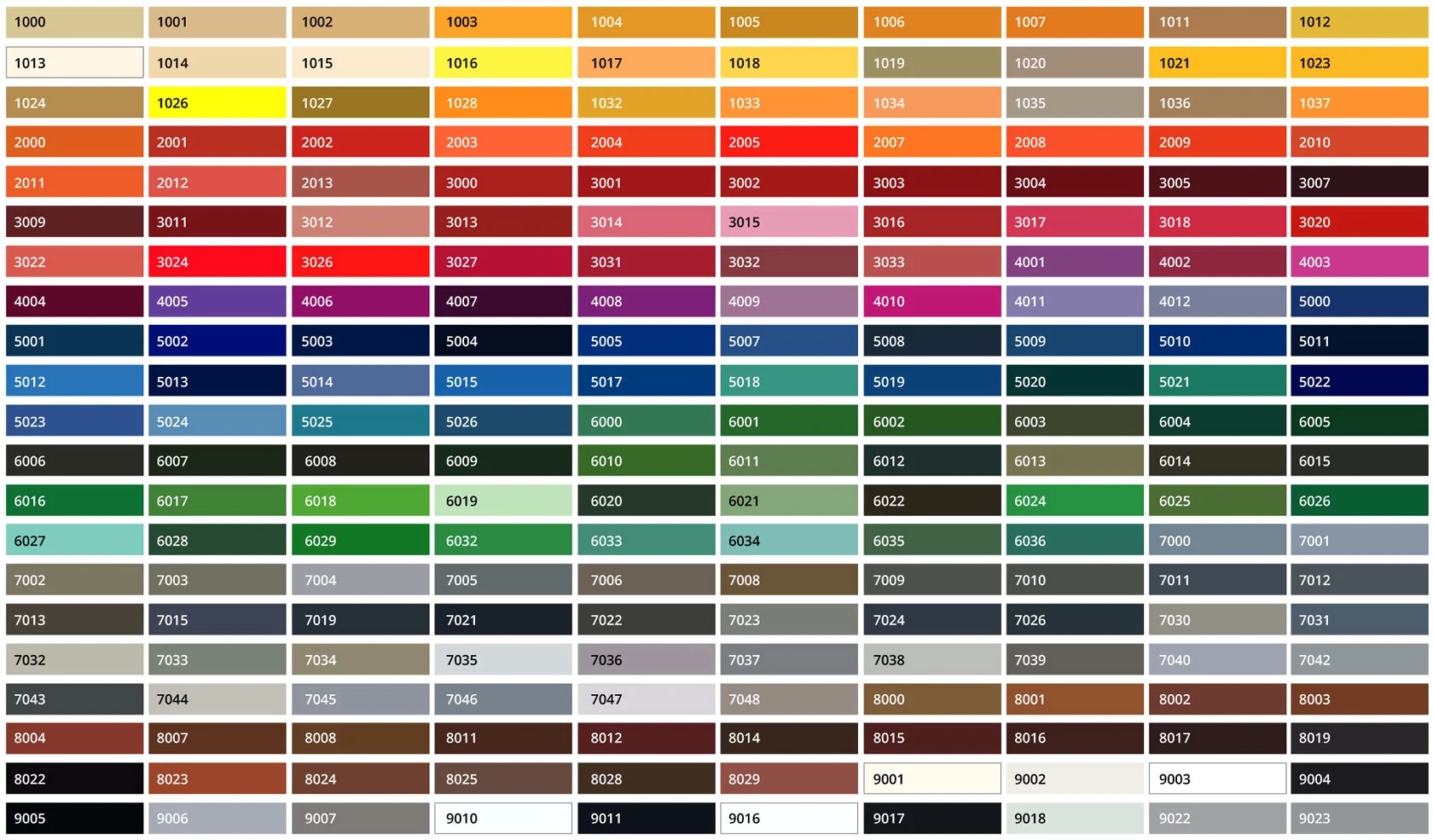
The system is available in RAL colours — RAL 7035, 7038 and 7040 in stock; other colours to order. In a food facility, this is not merely an aesthetic feature: colour-coded zones are a recognised HACCP practice for separating flows — raw from finished products, clean from dirty areas, and circulation routes from processing areas. Workers can see the boundary without signage or training.
The substrate: before coating
Most epoxy flooring failures occur not in the coating but in the concrete beneath it. Three conditions change the preparation:
| Substrate condition | Solution |
|---|---|
| Dry, sound concrete (moisture < 4%) | Primer SINMAST S2 WB water-based, VOC-free, or solvent-free SINMAST S2 |
| Damp concrete or moisture above the limit | Primer SINMAST S2 Wet on Wet — bonds to damp concrete with failure occurring in the concrete rather than at the bond; application from +8 °C |
| Honeycombing, broken edges, detached areas | Repair with the epoxy paste SINMAST P 103, which also adheres to slightly damp concrete |
| Hairline cracks 1.0–2.5 mm | Injection with SINMAST S2 Wet on Wet, using a gun or injection equipment |
Σε existing floor with rising damp, a vapour barrier membrane cannot be installed — moisture must be addressed above the slab, before applying the coating system.
The step-by-step system
- Substrate assessment: compressive strength > 22 MPa, tensile strength > 1.5 N/mm², moisture content — below 4% for standard primers; otherwise use a primer for damp substrates.
- Restructuring: remove laitance by shot blasting or diamond grinding to open the pores. Without this, there is no adhesion. Repair honeycombing and cracks.
- Primer: SINMAST S2 WB (water-based, ~0.150–0.200 kg/m², recoatable in 5–24 hours) or SINMAST S2 (solvent-free, ~0.200–0.300 kg/m², recoatable after 12–24 hours). It seals the pores and prevents pinholing in the top coat.
- Mixing: mix each component separately first, then mix the two together using a low-speed mixer (~300 rpm) to prevent air entrapment. Pot life 45–50 minutes at +23 °C.
- Application: at least two coats with a short-pile roller or airless spray, approximately 0.250 kg/m² per coat. Broadcast quartz where slip resistance is required.
- Curing: suitable for foot traffic after 24 hours; mechanical stress after 3 days; full chemical resistance after 7–12 days.
Conditions of application
| Parameter | Scope |
|---|---|
| Substrate and ambient temperature | +8 °C to +30 °C · optimum +15 to +25 °C |
| Low temperatures (+8 to +10 °C) | The condition is maintained for the first 24–36 hours |
| Relative atmospheric humidity | < 75% · ideally ≤ 60% |
| Dew point | Temperature at least 3 °C above the dew point |
| Filling the tank after application | 7 days at +30 °C · 10 days at +17 °C · 12 days at +10 °C |
For airless application, thin the product by 3–5% with its compatible solvent. In food production areas, allow a few days for volatile components to dissipate before operations begin — a small detail that determines the facility’s schedule, particularly in seasonal facilities such as olive mills and wineries, where the work window closes when the processing season starts.
Metal surfaces
For black sheet metal components, the procedure differs: sandblasting to a cleanliness grade of Sa 3 or Sa 2½ in accordance with SIS, an anti-corrosive zinc-epoxy coating, followed by SINMAST S2 primer and, finally, 2–3 coats of RM 22.
Beyond food
- Drinking water tanks — internal lining, closed or open type.
- Swimming pools of standard or Olympic dimensions.
- Fish hatcheries and fish farms — tanks for the rearing of aquatic organisms.
- Fire-fighting reservoirs, fountains, water parks, medium-sized artificial lakes.
- Pharmaceutical companies and laboratories where microbial load control is critical.
- Warehouses and distribution centres with pallet racking and forklifts, where the coating protects concrete from abrasion and dust.
The remaining areas of the premises
A food production facility is not just the production area. The adjacent areas have different requirements and require different materials:
- Dry storage areas & packaging: where there is no chemical exposure or contact with food, the TILT HIT is installed without adhesive over the existing floor, has a 2.70 mm wear layer, withstands pallet trucks and requires no operational shutdown.
- Cold rooms: the FIBRANxps 500 is extruded polystyrene for cold-room floors — insulation of the envelope is essential to prevent the floor operating under condensation conditions. In freezer rooms, the final coating is RM 32.
- Vapour barrier: in new builds, the FIBRANskin BARRIER 2400 is installed beneath the slab as a vapour barrier.
- Joint sealing: at junctions with equipment, frames and tiled walls, use sanitary silicone resistant to hot water and cleaning chemicals.
- Exterior structures: AQUAPANEL Outdoor for perimeter canopies, loading bays and extensions.
The SINMAST System
The Other Areas of the Unit
Related Solutions from ARGYNET LAB
What level of slip resistance is required — and who will carry out the gritting at the right time?
Request a Technical Quotation