Why should I choose stone wool for external thermal insulation?
Last updated:
Stone wool does not require polystyrene adhesive and will not hold in place without plugs. The 4+1 advantages — and how to ensure you don’t miss out on them.
The system at a glance
- FIBRANgeo BP-ETICS | Stone wool for External Thermal Insulation
- FIBRANgeo BP ETICSplus | Stone wool for External Thermal Insulation
- CERESIT CT 190 MW FLEX | Adhesive mortar and base coat for stone wool
- CERESIT CT 180 MW STRONG FIX | Stone wool adhesive mortar
- KLIMAS LTX10 | Thermal Insulation Plugs
- FIBRAN CAPS | ETICS Plug Covers
- CERESIT CT 327 | Glass fibre mesh
- CERESIT CT 174 | Silicone-based – Silicate rendering
Solutions & Applications · External Thermal Insulation
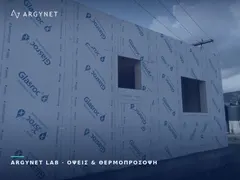
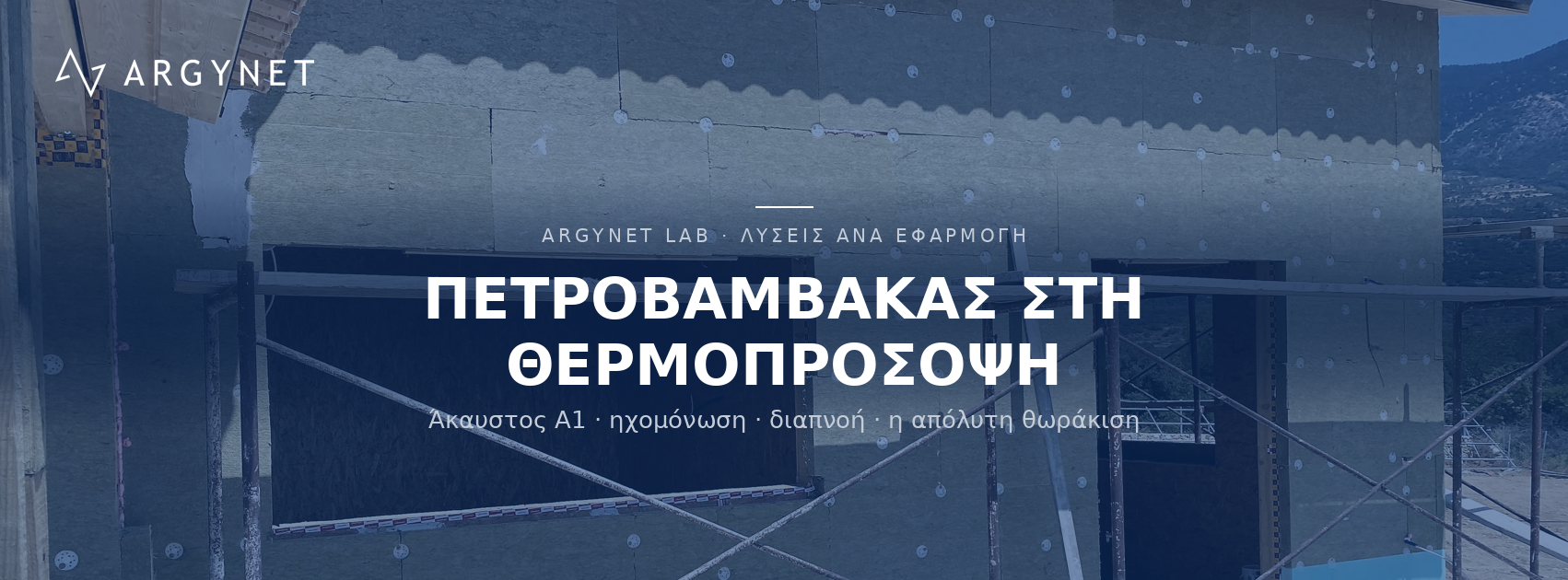
External Thermal Insulation with Stone Wool: the ultimate protection for the building. Stone wool is a natural, inorganic, fibrous insulating material, produced from basalt rock (basalt). Choosing it for an external thermal insulation system offers 4+1 unique advantages that polystyrene cannot match to the same extent.
The 4+1 advantages of stone wool
1. Excellent Fire Protection (Non-combustibility)
This is its most significant advantage. Stone wool is a non-combustible material (class A1). In the event of a fire, it does not ignite and does not produce smoke or toxic gases — it acts as a fire barrier, preventing the fire from spreading to the façade. It is ideal (and often mandatory) for schools, hospitals, hotels and multi-storey buildings.
A distinction that determines the specification: A1 relates to the material. The classification of the external wall insulation system is determined in conjunction with the final render — with the silicone-based CT 74, for example, WOOL CLASSIC is classified as B-s1,d0 and Universal MW as A2-s1,d0. Where the fire protection study specifies a classification, this is verified in the ETA for that particular combination.
2. Leading Sound Insulation
Thanks to its fibrous, open structure, stone wool traps sound waves. It drastically reduces external noise (road traffic, neighbourhood noise) and creates a quiet, high-quality atmosphere indoors.
3. Excellent breathability (‘the house breathes’)
It has very low water vapour diffusion resistance. It allows moisture generated inside the house (cooking, bathing) to escape to the outside, preventing water vapour from accumulating on the walls and eliminating the risk of mould and mildew.
4. Thermal Comfort in Winter and Summer
It has an excellent thermal conductivity coefficient (λ), keeping the house warm in winter and cool in summer. Furthermore, due to its high mass and density, it offers better thermal mass: the house takes longer to heat up on hot days.
+1. Natural & Eco-friendly Material
It is derived from nature (rock), is fully recyclable and is environmentally and people-friendly.
The stone wool slabs in our range
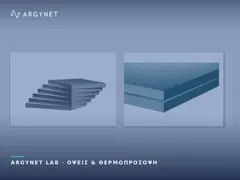
- FIBRANgeo BP-ETICS — stone wool for external thermal insulation.
- FIBRANgeo BP-ETICSplus — a version with higher mechanical strength for demanding façades.
The system: what type of adhesive and fixing method is required for stone wool?
Stone wool must NOT be fixed using polystyrene adhesives. It requires special high-adhesion mortars for mineral fibres, always in combination with mechanical fixing (plugs with metal nails):
- Bonding & base coat — Ceresit CT 190 MW Flex (adhesive & reinforced base coat for stone wool) or Ceresit CT 180 MW Strong Fix for bonding the boards. Details of the certified Ceresit Ceretherm Wool systems.
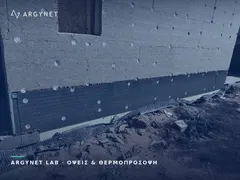
- Mechanical fixing — KLIMAS LTX10 thermal insulation fixings with metal nails, in accordance with ETAG 014. Their number and layout are determined by the specifier based on the substrate and wind loads. On stone wool, fixing is mandatory, not optional. The heads of the plugs are covered with FIBRAN CAPS caps.
- Reinforcement — CT 327 glass fibre mesh within the base layer.
- Final coat — vapour-permeable render (silicone-based / silicate-based), to maintain the system’s breathability.
Finishing coat: Ceresit CT 174 vapour-permeable render
The final render determines whether the breathability of the stone wool will be utilised. Ceresit CT 174 is a silicone-silicate finishing render: it combines the high water-vapour permeability of silicate plasters with the water-repellent and self-cleaning properties of silicone-based plasters. It is the ideal top coat for stone wool systems, as it allows the façade to ‘breathe’ whilst protecting it from water, pollutants and biological contamination.
The most common mistake when installing stone wool: using polystyrene adhesive on mineral fibres. It does not develop the required adhesion to the fibrous surface and the system fails. Stone wool requires its own mortars (CT 190 / CT 180) and must always be mechanically fixed using ETAG 014 anchors.
Second point: ensure the entire system is vapour-permeable. The major advantage of stone wool — its breathability — is negated if the final layer is a waterproof, non-breathable render. That is why we choose silicone-based or silicate-based finishing plasters and paints.
At ARGYNET, we specify the entire certified system (adhesive, board, dowels, reinforcement, top coat) and calculate the materials and number of dowels per m².
Related Products & Categories
Related Solutions from ARGYNET LAB
Are you designing external wall insulation using stone wool?
Request a Technical Quotation