Cool roof
Last updated:
A cool roof is defined not by its colour but by its reflectivity and emissivity. Liquid-applied coating or white membrane — and why it deteriorates.
The system at a glance
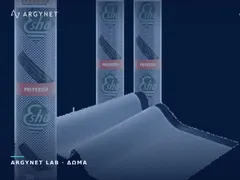
- ESHADIEN ULTRAWHITE SBS -20 | Cool roof
- ESHA ACRYCOAT | White acrylic waterproofing compound
- ESHAHYBRID | Elastomeric hybrid waterproofing compound
- ESHATOPRIMER | Adhesive primer for bituminous membranes
- ESHADIEN SBS -20 | Elastomeric bituminous membrane
- ESHAPERFO | Perforated bituminous membrane for a vapour pressure release layer
- FIBRANxps 300 | Flat roofs
- FIBRANxps INCLINE | Creating slopes
- FIBRANskin BARRIER 2400 | Synthetic vapour barrier membrane
- ESHA DESMOSEAL | Silane-based liquid-applied elastomeric waterproofing coating
Solutions & Applications · Waterproofing & Flat Roof Energy Efficiency
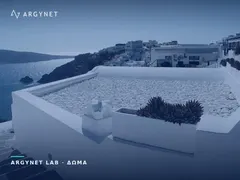
A dark Greek flat roof reaches surface temperatures in summer that are well above the air temperature. This heat is transferred to the building envelope, increasing the cooling load whilst simultaneously causing the waterproofing to deteriorate. A cool roof reverses this logic: instead of absorbing solar radiation, it reflects it and radiates back the heat it ultimately retains.
What Makes a ‘Cool’ Roof — Two Properties, Not One
A cool roof is not defined by its colour but by two measurable parameters that must co-exist:
| Property | What Matters | Why It Matters |
|---|---|---|
| Solar reflectance (SR / albedo) | The proportion of incident solar radiation that is reflected | Any radiation that is reflected is not converted into heat on the flat roof |
| Thermal emittance (ε — emittance) | The ability of a surface to dissipate the heat it has absorbed | Without radiation, heat is trapped even if the surface reflects it |
| SRI Index | Combines reflectance and emissivity into a single figure (ASTM E1980) | The only unit that allows for a direct comparison of materials |
Why ‘White’ Alone Is Not Enough
A glossy metallic surface has high reflectivity but low thermal emissivity — it reflects, but whatever it absorbs is retained and causes it to heat up. In contrast, a reflective elastomeric coating combines high reflectivity with high emissivity, which is why it remains cool.
In the specification, we always require both values — or the SRI index that combines them. A material that is simply described as ‘white’ has not specified anything measurable.
Benefits on Four Levels
| Level | Benefits |
|---|---|
| Building | Lower flat roof and indoor temperatures; reduced air-conditioning load; improved comfort conditions on the top floor |
| Waterproofing | Smaller temperature fluctuations mean less thermal expansion and contraction — extending the service life of the waterproofing layer |
| City | When applied to many buildings in the same area, it helps to reduce the local air temperature — mitigating the urban heat island effect |
| Environment | Reduced energy consumption for cooling, and therefore reduced CO₂ emissions |
Liquid-applied Coating or Membrane? Two Approaches to a Cold Roof
| Criterion | Liquid-applied Coating | White Bituminous Membrane |
|---|---|---|
| Typical use | Upgrading existing waterproofing | New build or complete refurbishment |
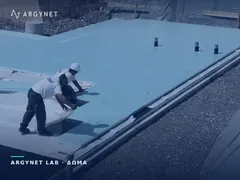
| Application | Coating — flameless, no removal required | Sheet bonding, factory-produced thickness |
| Waterproofing thickness | Reinforces the existing layer | Self-contained waterproofing layer |
| Complex geometries | Seamless membrane — ideal for multiple penetrations | Requires careful overlaps |
| Maintenance | Can be renewed with a new layer | Local repairs |
Liquid-applied coating with a European Technical Assessment: ESHA DESMOSEAL
When the cold-applied top coat also serves as the waterproofing for the flat roof, the documentation is just as important as the colour. ESHA DESMOSEAL is a single-component liquid-applied coating based on silane resins, which cures on contact with air and produces a brilliant white film. The film does not yellow and is not affected by airborne particles or dirt — in other words, it specifically counteracts the mechanism that causes reflectivity to diminish over time.
| Documentation | ETA-18/0654 (DIBt) in accordance with ETAG 005 · CE in accordance with EN 1504-2 |
| Service life | W3 — 25 years (ETAG 005) |
| Scope | Substrate gradients S1–S4 · climate zones M & S · mechanical wear P1–P4 |
| Flexibility | Elongation at break > 300 per cent; tensile strength 2.0 N/mm² |
| Breathability | Water vapour permeability 30 g/m²/h (ISO 9932) |
| Ageing | 4,000 hours of artificial ageing (UV + humidity) whilst maintaining properties and elasticity |
| Consumption | 1.0–1.5 litres/m² → membrane thickness 1.0–1.5 mm |
Apply cold, using a roller or spray gun, in 2–3 cross-layered coats of up to 0.5 mm each, allowing at least 3 hours’ drying time. Cracks are first filled with ESHAPOLYSEAL 1K; where reinforcement is required, ESHATERRA 50 reinforcement is inserted between the coats. On concrete, PRIMER PU or PRIMER AQUA 2K is recommended as a primer.
- Dry substrate: on a damp substrate, priming with PRIMER AQUA 2K is mandatory; cleaning must be carried out using compressed air, not water. Do not apply in rain, frost or at temperatures below +5 °C.
- Reaction to fire class E: checked against the building’s fire protection design.
- No root-resistant layer: root resistance is not specified (NPD) — a separate root-resistant membrane is required for a green roof.
Step-by-step guide
- Substrate inspection: the condition of the existing waterproofing is recorded — blisters, open joints, standing water. The cold-applied material does not rectify any existing defects.
- Cleaning: removal of dust, salts, algae and decayed areas. Adhesion is assessed at this stage.
- Drainage check: ensure there is a sufficient drainage gradient. Standing water on a cold roof leaves salt deposits and reduces reflectivity locally.
- Priming: use a suitable primer depending on the substrate — concrete, old bituminous membrane or mosaic tiles require different preparation.
- Reinforcement of critical points: upstands, guttering and penetrations are reinforced locally prior to the application of the main layer.
- Apply in two coats: in a criss-cross pattern, allowing for the drying time and adhering to the stated consumption per m². Reflectivity depends on complete, uniform coverage.
The Overlooked Factor: Ageing
Reflectivity decreases over time due to pollution, dust and biological growth. This is why international assessment protocols specify values for both new and aged surfaces — and it is the latter that matters in practice.
A simple periodic cleaning of the flat roof restores much of its original performance. Without this, the system silently underperforms. Therefore, when selecting a liquid-applied coating, it is not only important how white it is on the first day, but whether it remains white — materials with a coating that does not yellow or retain dirt, such as ESHA DESMOSEAL, lose their reflectivity more slowly.
A cool roof is one layer of a system, not a substitute for thermal insulation. Reflection reduces the thermal load reaching the flat roof; thermal insulation controls what passes through to the interior. On a flat roof without adequate insulation, the cool roofing material performs at only a fraction of its potential.
At ARGYNET, we specify the entire flat roof structure — vapour barrier, thermal insulation, screeds, waterproofing and cold-applied top coat — and calculate materials per m².
Related Products & Categories
Would you like to reduce the cooling load and extend the life of your waterproofing?
Request a Technical Quotation